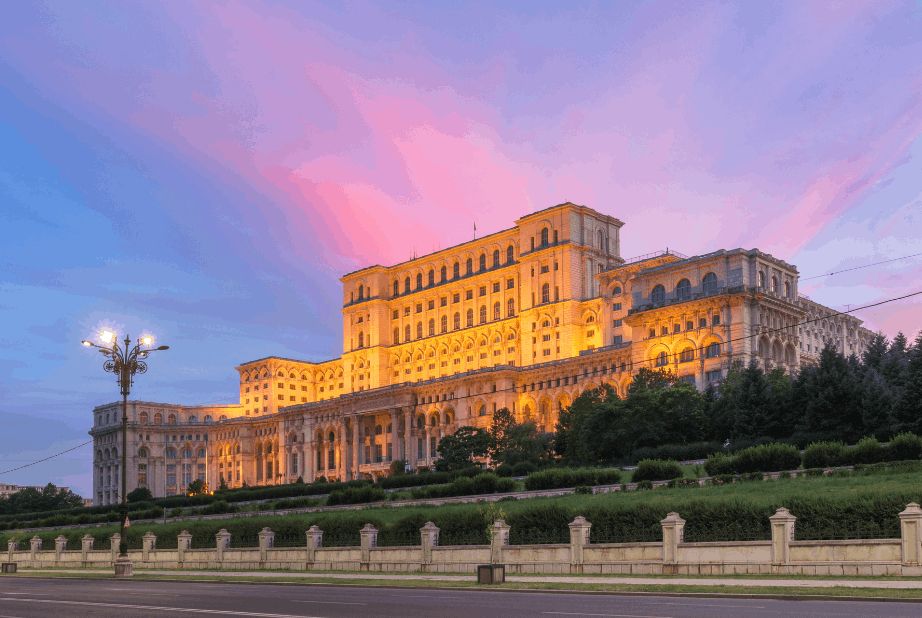
Romania is located in Southeastern Europe, sharing borders with Ukraine to the north, Bulgaria to the south, Serbia to the southwest, Hungary to the west, and Moldova to the east. The country also has a coastline along the Black Sea. The capital city is Bucharest, which is also the largest city. Other major cities include Cluj-Napoca, Timișoara, Iași, and Constanta. The official language is Romanian.
Studying in Romania can be a rewarding experience as the country has a rich cultural heritage, a diverse academic environment, and a growing reputation for high-quality education.
Romania lies in the Eastern wing of the European Union. With a population of 21 million, it is one of the medium-sized countries of Europe. Romania borders Hungary, Ukraine, the Republic of Moldova, Bulgaria, Serbia, is placed on the lower Danube and shares part of the Black Sea coast. The capital is Bucharest, which has a population of over 2 million inhabitants. The official language is Romanian but Media is publishing also in Hungarian, German, and English. Romanian culture is a blend of various influences, including Latin, Ottoman, and Slavic. Traditional music, dance, and folklore play an important role. Romania is known for its diverse landscapes, including the Carpathian Mountains, Transylvania's medieval castles, the Danube River, and the Black Sea coast.
Romania has numerous universities, both public and private. Some well-known institutions include the University of Bucharest, Babeș-Bolyai University, and Politehnica University of Bucharest.
Explore the programs offered in English, especially if you are not proficient in Romanian.
International students are generally allowed to work part-time during their studies. Check the regulations to ensure compliance. Explore options for post-study work or further education if you plan to stay in Romania after completing your studies.
Romania is becoming an increasingly popular destination for international students due to the quality of education and relatively affordable living costs.
Admission requirements vary by university and program. Typically, you'll need to provide proof of previous education, language proficiency, and other program-specific requirements. Applications are usually submitted through the university's admission portal. Ensure you follow the application guidelines and deadlines. Non-EU/EEA students often need a student visa. Contact the Romanian embassy or consulate in your home country for specific requirements and application procedures.
Free AI Website Maker